Essaouira Coastal Guide

Mason O'Donnell
| 17-04-2026

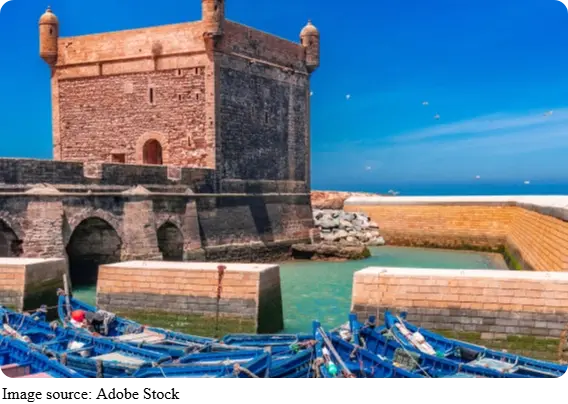
Most people who visit Morocco head to Marrakech or other major imperial cities — known for their famous medinas, crowded souks, and well-worn tourist trails.
A smaller number of visitors make it three hours west to the Atlantic coast, where the wind blows constantly off the ocean, and the light feels completely different from the inland desert cities.
And a walled coastal town that has been drawing artists, travelers, and fishermen for centuries sits at the edge of an extraordinary stretch of rocky shoreline. Have you heard of Essaouira? If not, this article will change that. If you have, this guide will help you get there properly.
Essaouira, Morocco
What Makes Essaouira Different
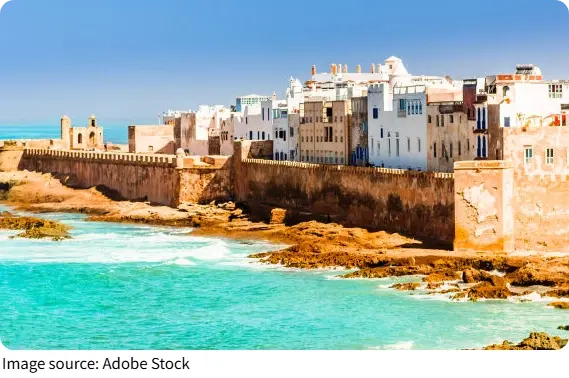
Essaouira sits on a rocky Atlantic peninsula, its white-and-blue medina enclosed by 18th-century ramparts that look directly out over the ocean. Unlike Marrakech — intense, hot, and relentlessly stimulating — Essaouira operates at a different pace. The wind, which blows strongly and almost constantly from the north, keeps temperatures moderate even in summer and gives the city a restless, salt-tinged atmosphere that feels unlike any other Moroccan destination.
This Swiss mountain village offers stunning Alpine scenery without the crowds — and it’s beautiful year-round
This ancient rock formation looks exactly like an elephant — and it's one of Arabia's best kept secrets
America's most photographed lighthouse is even more stunning in person — here's how to visit it.
Tegallalang is the most photogenic spot in Bali — here's everything you need to know before going
New Zealand's Most Breathtaking Mountain Range Will Reset Your Entire Sense Of Scale!
Scotland's Most Magical Bridge Will Leave You Completely Speechless!
The city's history layers multiple cultures over each other in ways that are still visible in the architecture and the street plan. Phoenician traders, Portuguese navigators, and French administrators all left marks on the town's form. The medina that exists today was largely designed in the 18th century by a French architect working for the Moroccan sultan — an unusual collaboration that produced a grid-based street plan within traditional medina walls, creating a city that is considerably easier to navigate than other major Moroccan cities without losing any of the atmospheric density.
The rocky shoreline visible from the ramparts — stretching south from the city walls across tidal pools and golden sand channels between dark basalt outcrops — is one of the most visually compelling coastal landscapes in northwest Africa. At low tide, the exposed rock formations create a labyrinth of channels and pools that locals cross on foot, as the photograph shows — small figures moving across golden sand between the rocks, the Atlantic breaking in white lines beyond them.
Getting There
Essaouira is accessible primarily by road from Marrakech, the nearest major city with an international airport. The journey covers approximately 175 kilometers and takes around two and a half to three hours by road depending on traffic and route.
Supratours and CTM, Morocco's main intercity bus operators, run regular services between Marrakech and Essaouira with tickets costing approximately $8 to $12 USD per person each way. The bus station in Essaouira is located outside the medina walls, a short walk from the main entrance.
Shared grand taxis — the long-distance shared vehicle system that operates across Morocco — offer a faster alternative at approximately $10 to $15 USD per person for the Marrakech to Essaouira route.
Private transfers from Marrakech cost approximately $60 to $90 USD for a full vehicle, making them economical for groups of three or more and considerably more comfortable than the bus for the scenic coastal approach to the city.
From Casablanca, the journey by road takes approximately four hours. Regular bus services connect the two cities with tickets from approximately $12 to $18 USD per person.
Where to Stay
The medina of Essaouira is compact enough to explore thoroughly on foot in a single day, though the city rewards slower engagement over two or three days.
The ramparts — the Skala de la Ville — are the defining experience and are freely accessible. Walking the seaward fortifications provides the elevated view over the rocky coastline that photographers seek, and the cannons mounted along the battlements date from the city's trading heyday. Entry to the ramparts is free and they are open throughout daylight hours.
The harbor, located to the south of the medina, remains an active fishing operation where wooden boats are built and repaired using traditional methods. The boat-building yard is open to casual observation at no charge, and the harbor market in the morning hours — where the overnight catch is unloaded and sold — is one of the most authentic market experiences in coastal Morocco.
Essaouira is also one of the world's premier destinations for wind-based water sports. The consistent northerly wind makes the beach south of the city ideal for kitesurfing and windsurfing. Lessons and equipment rental are available from several operators on the beach from approximately $50 to $80 USD for a half-day introduction session.
Where to Stay
Accommodation in Essaouira ranges from converted riad properties within the medina walls to small boutique hotels with ocean-facing rooms.
Heure Bleue Palais is the most celebrated property in the city — a converted 18th-century mansion within the medina offering elegant rooms, a rooftop terrace, and a swimming pool from approximately $180 to $280 USD per night depending on season.
Riad Safar offers intimate medina accommodation with traditional Moroccan courtyard design from approximately $90 to $140 USD per night.
For travelers on tighter budgets, a range of well-reviewed guesthouses and smaller riads within the medina offer comfortable rooms from approximately $35 to $70 USD per night, many including breakfast.
Where to Eat
Restaurant La Table by Madada
- Price: $15–$25 USD per person
Caravane Café
- Price: $12–$20 USD per person
Vague Bleue
- Price: $10–$18 USD per person
Essaouira is the kind of place that people discover and immediately begin recommending to others — not because it is undiscovered, but because it delivers something that most Moroccan destinations do not: space, wind, light, and a pace that allows the city to be felt rather than just seen.
Rather than overwhelming visitors, it offers a balanced and immersive experience shaped by culture, coastline, and climate.
Whether you have already considered visiting or are just discovering it now, Essaouira remains a destination where the atmosphere is as memorable as the sights themselves.